

AI In Industry
Jan 4, 2026
Photo Credit: Pexel
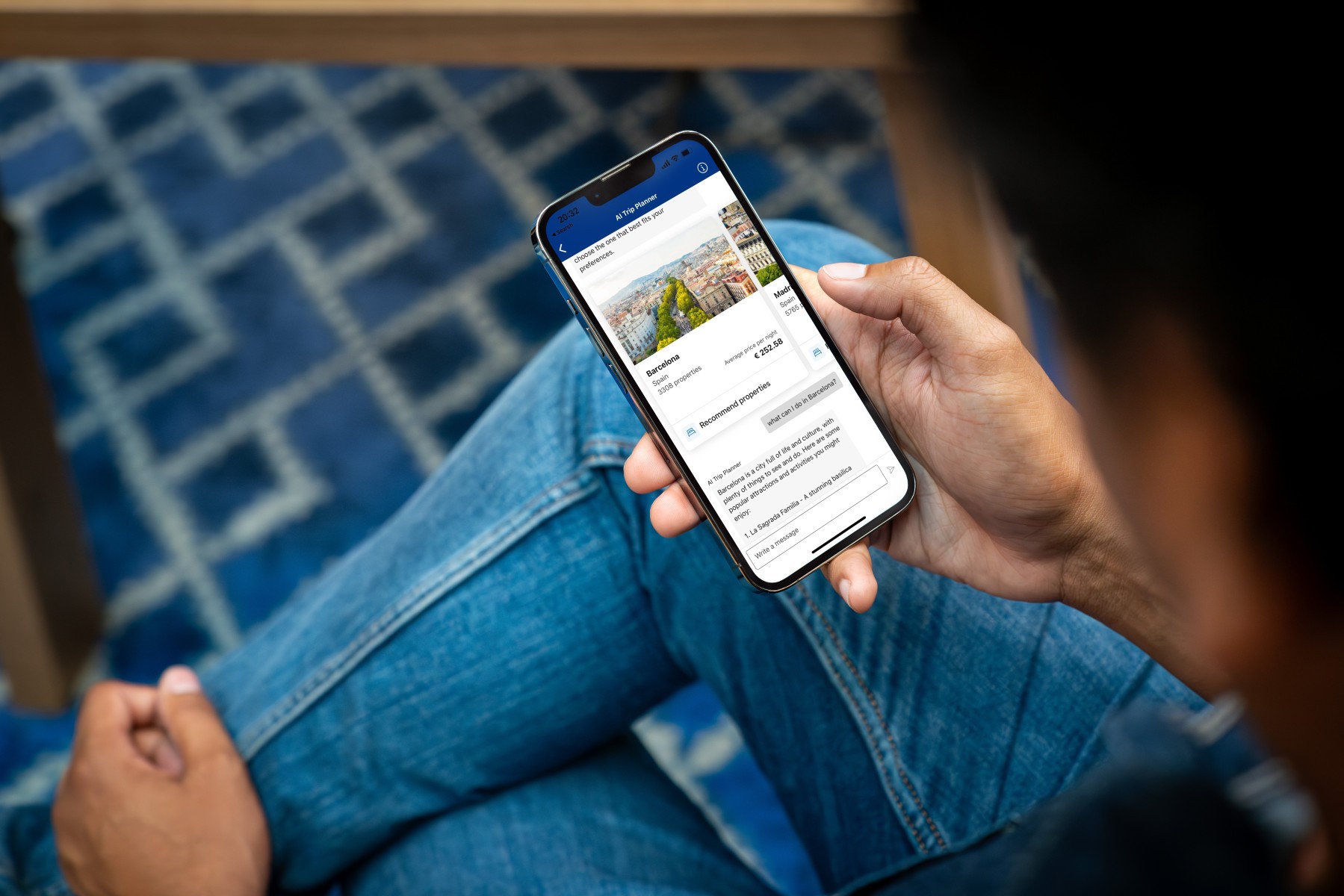
LLM shopping is already mainstream. Customers are increasingly asking ChatGPT, Copilot, and SGE what to buy instead of clicking through blue links—and that shift is accelerating adoption and traffic patterns.
Visibility is becoming “winner-take-most.” AI answers typically surface only a few brands (sometimes one), so if you’re not named in the response, you’re invisible for that query moment.
SEO isn’t dead, but the rules changed. Keyword ranking matters less than being recommendable in AI outputs, which rely on trust, consensus, and structured facts more than classic on-page tweaks.
You need a new KPI: “share of answer.” Marketers should track where/when they appear in AI recommendations, which competitors appear alongside them, and what attributes the model repeats.
Fast movers will lock in durable advantage. Because LLM training and trust signals compound, brands that adapt early (data clarity, list dominance, review depth, consistent positioning) will get disproportionately more AI-referred demand.
GEO layers on top of technical SEO. Keep doing site health and crawlability work, but add generative-engine optimization focused on consensus signals and AI-readable product knowledge.
E-commerce is in the middle of a structural shift in how people discover and choose products. The old playbook—optimize for Google keywords, win the click, then convert on-site—is no longer enough. AI-driven conversational search is becoming a parallel front door. Instead of typing into a search bar, shoppers are asking tools like ChatGPT or Bing Chat what to buy, comparing options in a dialogue, and sometimes letting the assistant guide the purchase. That behavior is already influencing traffic patterns, conversion quality, and ultimately which brands enter the consideration set in the first place. [1], [2]
A blunt way to put it: if you don’t show up in AI answers, you don’t show up for a growing share of buyers. Some platforms are already framing it that starkly—“If you’re not visible in AI answers, you’re invisible to buyers.” [3] And that’s the key shift marketers need to internalize. The front door isn’t simply search results anymore; it’s conversation. This article breaks down what’s changing in LLM-driven search behavior, why it matters for visibility and revenue, and how marketers can start adapting now without ripping out their stack.
A growing wave of shoppers is using AI chatbots as shopping assistants. Recent U.S. data shows roughly 38–39% of consumers have already used generative AI for online shopping research, and more than half say they plan to try it soon. [1], [4]
Even among people who already use ChatGPT, behavior is shifting from “toy” to “tool.” About 77% of ChatGPT users treat it like a search engine, and nearly one in four say they go to ChatGPT before Google—especially Gen Z. [2] They’re asking for product recommendations, gift ideas, trend breakdowns, or deal-hunting guidance. The assistant becomes a personal shopper that’s always available and context-aware.
This isn’t just a perception shift; it’s showing up in traffic. Adobe’s analysis of over one trillion retail site visits finds AI-driven referral traffic surging exponentially. During the 2024 holiday season, visits from gen-AI tools to U.S. retail sites rose about 1,300% year-over-year, including a roughly 1,950% spike on Cyber Monday. [4] Growth didn’t slow in 2025. By July, LLM-based shopping traffic was up around 4,700% versus a year earlier. [1]
Yes, that growth is from a small base—AI chat still represents less than 1% of total retail traffic in many categories. But the trajectory is the point. A channel can be “small today” and still become strategically decisive because it’s where high-intent discovery happens early.
Trust is also accelerating adoption. Around 30% of consumers now say they trust ChatGPT’s answers more than Google’s in certain contexts. [2] And AI is already driving discovery: about 36% of U.S. users say they’ve found a new product or brand through ChatGPT. [2] Among Gen Z ChatGPT users, nearly half have been introduced to new brands via chatbot recommendations. [2]
Marketers are noticing. In a May 2025 Adobe survey, 76% of business owners and marketers said it’s essential for their brand to appear in ChatGPT answers this year. [2] Two-thirds plan to increase focus on “AI visibility.” [2] In other words, the market is shifting from should we pay attention? to how fast can we adapt?
This shift isn’t just a new interface—it changes how information is pulled, evaluated, and served. Four differences matter most:
Answers over links.
Traditional search gives a list of results. LLM search gives a synthesized answer or a very short shortlist. There’s no “first page” to climb; you’re either in the answer or you’re not. That compresses visibility into a winner-take-most dynamic. It also intensifies the zero-click trend that’s already common on Google. Over 60% of Google searches now end without a click because the results page satisfies intent. LLM answers take that further by providing richer, more complete responses without requiring a visit. [5]
Natural-language intent instead of keywords.
SEO has been about matching keyword phrases. LLMs interpret full context. A shopper doesn’t ask “best noise-cancelling headphones.” They ask, “I need comfortable wireless headphones for long flights under $200—what should I buy?” The AI parses constraints, preferences, and unstated intent. That leads to more tailored recommendations and fewer steps for the shopper. For brands, it means content needs to map to real buyer questions and use-cases, not just keyword variants.
No direct “pay-to-play” in answers.
In many AI assistants, results are still organic. If someone asks ChatGPT for the best running shoes under $100, the model aims to answer based on relevance and credibility, not ad bids. [6] That levels the playing field in one sense—but removes a lever marketers have relied on for years. You can’t simply buy the top slot in a conversational answer. You have to earn inclusion through strong signals across data, content, and reputation.
AI chats are becoming conversion surfaces.
The biggest shake-up is that AI isn’t only advising purchase decisions. It’s increasingly facilitating them. ChatGPT’s “Instant Checkout” now allows U.S. users to buy products from select merchants directly in chat, with integrations involving platforms like Shopify and Stripe. [6] Built on OpenAI’s Agentic Commerce Protocol, this model compresses discovery, comparison, and checkout into a single conversational flow. [5]
For marketers, that changes the funnel. The AI can recommend a competitor and complete the transaction without ever sending the shopper to your site. If your catalog isn’t accessible to the assistant—or your brand isn’t trusted enough to be suggested—you may lose the customer before your funnel even begins.
In the near term, LLM search is both an opportunity and risk.
On the opportunity side, AI assistants are already generating measurable referral traffic. Bing Chat, ChatGPT browsing, and similar tools sometimes cite sources or offer links, driving clicks to the brands they mention. Adobe confirms a roughly 1,200%+ increase in retail visits originating from gen-AI tools over about seven months. [4] In short, this is a new organic acquisition channel that barely existed a year ago.
More importantly, the traffic quality is strong. AI-referred shoppers browse more pages (Adobe notes about 12% more pages per session) and bounce less (around 23% lower bounce) than typical visitors. [4] That’s consistent with what you’d expect from a pre-qualified funnel. The assistant helps shoppers refine needs, reduce uncertainty, and land on a site with clearer intent. Boston Consulting Group has found AI-assistant traffic to be about 10% more engaged on average and often further down the funnel. [5]
But the risk is equally real: not every AI interaction produces a click. A shopper might ask an AI “best 4K TV for gaming” and get a detailed answer with one clear winner. If that’s satisfying enough, they may never visit your site or a review publisher’s site. Zero-click search—already common on Google—will likely expand as LLMs supply richer answers directly in chat. [5]
When buyers don’t visit your site, you lose chances to capture first-party data, cross-sell, build email lists, or design the experience on your terms. The AI intermediary becomes the relationship owner, and you become a supplier in the background. That makes it critical that what the AI says about your products is accurate, compelling, and includes a purchase path—whether via link, affiliate pipeline, or integrated checkout.
Conversion behavior is also evolving fast. Early on, AI-referred shoppers converted at much lower rates. Late-2024 Adobe data suggested they converted at about one-fifth the rate of traditional traffic—mostly using AI for research. [1] By mid-2025, that gap shrank to roughly a 23% lower conversion rate than normal traffic. [1] At the same time, Adobe found revenue per visit from AI traffic doubled year-over-year, narrowing the disparity from nearly 100% lower to just 27% lower by July 2025. [1]
That direction matters more than the exact number. As shoppers get comfortable trusting AI recommendations, LLM-sourced traffic is trending toward parity with search and paid channels. If you can earn inclusion and visibility organically, the CAC upside could be enormous.
In classic SEO, you fought for rank on a results page. In LLM search, you fight to be chosen for the answer.
This is what’s now called Generative Engine Optimization (GEO)—the LLM-era analog to SEO. [7] First Page Sage analyzed how major AI models recommend products across 11,000+ test queries, and their findings are revealing. [7]
ChatGPT, for instance, weighted recommendations roughly as follows:
41% authoritative “best of” list mentions
18% awards/credentials
16% user reviews
14% usage/market presence
11% social sentiment [7]
Other bots vary—Google’s generative models lean even more heavily on their existing authority signals—yet the core logic is consistent: LLMs favor structured, reputable confirmation of “what’s best.” [7]
AI models love ranked list content because it’s structured, comparative, and easy to summarize. If you’re featured in trusted “Best X of 2025” articles, your odds of appearing in AI answers rise dramatically. [8] If you’re absent, you’re effectively invisible to the model’s “what the internet believes is best” layer. That makes PR, affiliate relationships, and category content strategy even more important than before.
Reviews function like link authority did in SEO. LLMs scrape multi-platform sentiment from places like Amazon, Trustpilot, BBB, Yelp, and category review sites. High ratings across platforms validate you; thin or negative review profiles can disqualify you. [8] The playbook is familiar but more urgent: solicit reviews systematically, respond to issues publicly, and keep your reputational footprint strong.
Social sentiment is a smaller factor, but it can tip close calls. LLMs read forums, social, and news. If your product is consistently praised (or criticized) in public spaces, the model will notice. [8]
This is not “SEO is dead.” Many LLMs still pull from search indices to collect sources. If you don’t rank reasonably well on Google or Bing, the assistant may never encounter your content. Also, Google’s own generative answers incorporate standard authority signals. [7] Traditional SEO remains the foundation; GEO adds a new layer on top.
Some brands are also experimenting with llm.txt—a nascent equivalent to an AI-optimized sitemap that highlights the most useful pages for models. It’s optional today, but could play a role in discoverability as standards evolve. [5]
Bottom line: winning AI visibility is about optimizing your entire digital footprint, not just your site. SEO + authority + reviews + sentiment = LLM visibility.
This isn’t a future shift — it’s already shaping how customers discover products. Shoppers are asking AI what to buy, trusting the answers, and skipping traditional search steps. If you aren’t showing up in those AI recommendations, you’re not just losing clicks — you’re getting cut out of the consideration set entirely.
The upside for acting now is real: AI-driven referrals are growing fast, and they tend to bring higher-intent shoppers. The downside of waiting is also real: as AI assistants become the default discovery layer, catching up gets harder and more expensive. This is one of those moments where early visibility compound.
Here’s how to start without a full rebuild:
Audit your AI visibility: Run your category’s real buyer questions through ChatGPT/Bing and see where (or if) you show up. Tools like Yolando can scale this monitoring and surface gaps.
Tighten content + product signals: Publish high-authority guides and keep product data, schema, pricing, and availability clean and consistent.
Build reputation where models look: Prioritize list placements, review volume/quality, and visible credibility signals.
Track AI as a channel: Add AI-referred traffic and conversions to your reporting, and iterate like you would for SEO.
LLM search is becoming a primary discovery layer for ecommerce. It rewards brands that are clearly positioned, widely validated, and easy for models to interpret. The playbook isn’t “replace SEO” — it’s expand it: optimize for answers, not just rankings. Brands that move now will earn durable visibility in AI-driven shopping journeys. Brands that wait will find themselves fighting for relevance in a world where the assistant has already chosen the shortlist.
Adobe, “5 ways AI will change Black Friday,” Adobe Business Blog, 2025. https://business.adobe.com/blog/5-ways-ai-will-change-black-friday.
Adobe, “Using ChatGPT as a search engine,” Adobe Express Learn Blog, 2025. https://www.adobe.com/express/learn/blog/chatgpt-as-a-search-engine.
Yolando, “Get Found, Cited, and Recommended by AI,” Yolando, 2025. https://yolando.com/.
Adobe, “Adobe Analytics: Traffic to U.S. retail websites from generative AI sources jumps 1,200 percent,” Adobe Blog, Mar. 17, 2025. https://blog.adobe.com/en/publish/2025/03/17/adobe-analytics-traffic-to-us-retail-websites-from-generative-ai-sources-jumps-1200-percent.
D. Wang, “The state of AI search in e-commerce,” Medium, 2025. https://medium.com/@Wang.Daniel/the-state-of-ai-search-in-e-commerce-9c246c1af082.
OpenAI, “Buy it in ChatGPT,” OpenAI, 2025. https://openai.com/index/buy-it-in-chatgpt/.
First Page Sage, “Generative Engine Optimization (GEO) explanation,” First Page Sage SEO Blog, 2025. https://firstpagesage.com/seo-blog/generative-engine-optimization-geo-explanation/.
First Page Sage, “SearchGPT optimization 2025 guide,” First Page Sage SEO Blog, 2025. https://firstpagesage.com/seo-blog/searchgpt-optimization-2025-guide/.