AI SEO & Discoverability
Jan 4, 2026
The era of keyword stuffing is over; the era of Answer Engine Optimization (AEO) has arrived. We help you evolve from writing for readers to structuring knowledge for retrieval. This guide transforms narrative pages into atomic assets that Large Language Models (LLMs) can verify and quote.
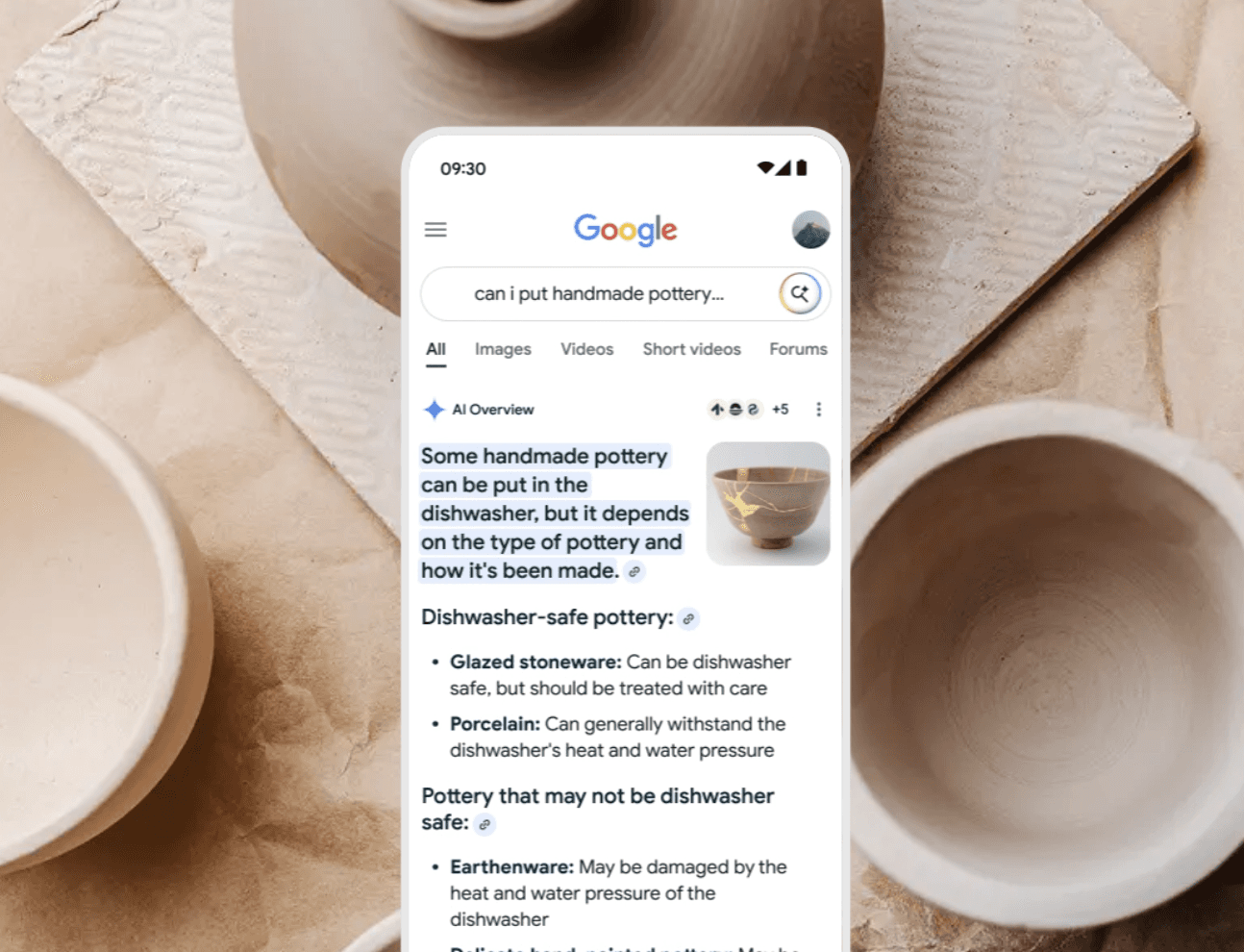
Visibility now relies on becoming the verifiable source an agent selects to construct its response, forcing brands to adapt to zero-click interactions where the answer is displayed immediately. The user journey in 2026 frequently begins and ends directly within the AI interface, bypassing traditional websites entirely.
Users now expect direct answers without navigating to a website, which compels your content to function as the backend database for the AI's frontend interface. If your data lacks the structure for easy retrieval, the model will bypass it for a source that parses more cleanly. This shifts your content strategy from publishing narrative articles to building a retrievable knowledge graph.
The primary goal of visibility has evolved into a "seen, cited, chosen" model so you can ensure your brand is the verifiable source an agent selects. Being "seen" means the model indexes your content; being "cited" means it attributes a fact to you; being "chosen" means it presents your solution as the answer. Ranking #1 on a traditional search engine results page (SERP) is irrelevant if the AI summary above it excludes your brand entirely.
Brands that fail to adapt risk exclusion from the conversation, as AI assistants prioritize structured, verifiable facts over promotional narratives. The cost of invisibility is high; if an LLM cannot confidently extract your pricing or definitions, it will hallucinate an answer or cite a competitor. You cannot afford to have your expertise locked inside unstructured text blocks that agents cannot parse.
Models prioritize structured sources because they reduce processing friction and ambiguity, allowing algorithms to extract facts without parsing narrative noise. LLMs and Retrieval-Augmented Generation (RAG) systems struggle to extract facts from long, winding text blocks that bury the lead. Reducing the cognitive load required to understand your content increases the probability of retrieval and citation.
Dense narratives create a "needle in a haystack" problem that makes it difficult for retrieval algorithms to isolate specific data points. If a model must read 5 paragraphs of backstory to find a product specification, the retrieval cost becomes too high. This often leads to your content being bypassed in favor of a competitor who utilized a bulleted list for immediate clarity.
RAG systems pre-filter information for relevance before it reaches the LLM context window to save computational resources. Content that is difficult to parse is often discarded during this initial phase, regardless of the quality of the prose. Formatting serves as a critical signal that tells the pre-filtering algorithm your content contains valid, extractable information.
Structured data reduces the risk of hallucination by providing clear boundaries around facts, making your content a "safer" choice for the model to cite. Models are tuned to avoid risk; when they encounter ambiguous text, they lower their confidence score. Providing rigid structure effectively hands the model a script it can repeat with high confidence.
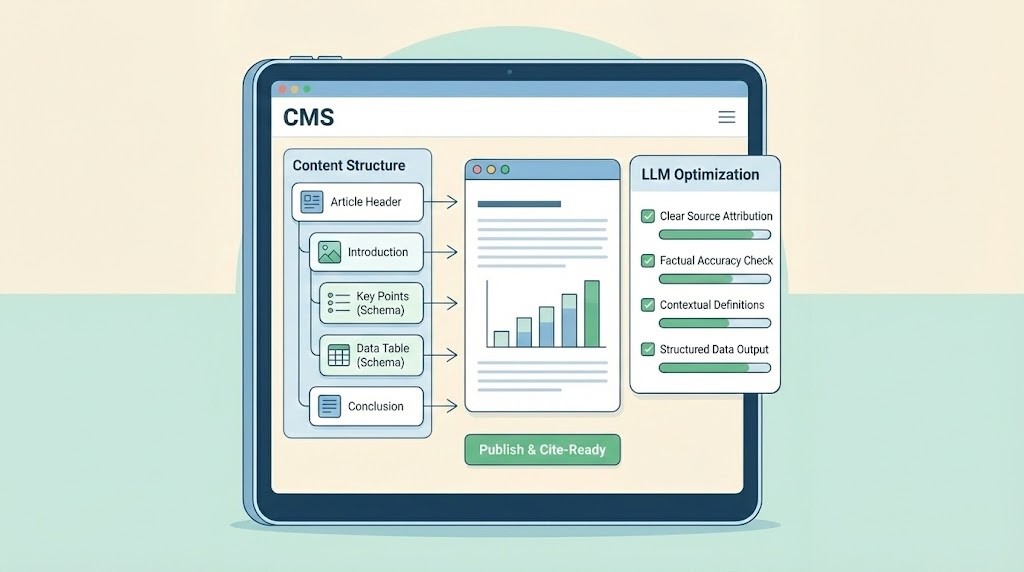
A citation-ready page consists of atomic units, front-loaded definitions, and extractable formats that provide a predictable map for retrieval agents. Organizing content into these distinct components ensures that models can extract and attribute the key facts you want to own without processing unnecessary noise.
Place the critical definition or summary at the very beginning of the content to hit the model's attentional sweet spot and ensure early relevance scoring. We call this the BLUF (Bottom Line Up Front) method, and it ensures the primary entity is defined before any context is introduced.
Ensure the first 100 words contain the core answer to the user's query so the model captures the definition immediately. If the page title is "What is Agentic AI?", the very first sentence must be "Agentic AI is..." Pages that fail to define the core topic immediately are consistently retrieved less frequently for definition-based queries.
Avoid burying the lede to prevent retrieval systems from penalizing your content for inefficiency. In 2026, content that forces a "scroll for value" interaction is often abandoned by retrieval agents. If the model has to parse 500 words of backstory to find the answer, the retrieval attempt typically fails.
Format headers as explicit questions followed immediately by concise answers to mirror user intent and help RAG systems index specific data points. This syntax matches the query structure the LLM is trying to resolve, providing a clean "question-answer" pair.
Write questions as headers rather than abstract themes to amplify the relevance signal for natural language queries. Instead of "The Importance of Structure," use "Why does structure matter for LLMs?" When the header matches the user's prompt, the probability of retrieval increases significantly.
Design content so individual paragraphs stand alone as complete thoughts to allow agents to quote them verbatim without losing context. We refer to these as "extractable statements." If a paragraph relies on previous text to make sense, it cannot be easily cited in a standalone summary.
Use bullet points, data tables, and bolded terms to create visual hooks that allow retrieval algorithms to easily grab and parse essential data. Breaking complex narratives into structured lists significantly improves machine-readability and increases the likelihood of inclusion in list-based answers.
Format for parsing by using visual hierarchies to isolate essential data points so the model can identify high-density information sources. A table comparing features is instantly recognizable as a source of facts. These elements act as signposts that tell the model exactly where the data resides.
Limit narrative length by breaking complex ideas into lists or steps to facilitate extraction for "how-to" responses. While humans might tolerate a wall of text, retrieval algorithms view it as unstructured noise. Converting a procedure into a numbered list makes it infinitely more usable for an AI.
Code and credibility provide the necessary validation layer that assigns a confidence score to your content, distinguishing it from unverified competitors. While text provides the answer, metadata provides the trust signal required for the model to select you.
Implement schema markup like FAQPage or Article to disambiguate entities so models can categorize your content correctly within their knowledge base. This code layer removes ambiguity by telling the crawler exactly what the content represents and how to treat it. By explicitly mapping relationships, such as connecting an author to their credentials, you build a knowledge graph that increases the retrieval confidence score.
Demonstrate Experience, Expertise, Authoritativeness, and Trustworthiness (E-E-A-T) to differentiate your content as a premium, low-risk citation source. Transparent sourcing and verifiable authorship provide the validation layer AI cannot generate itself, signaling that a real subject matter expert stands behind the content. You should also cite transparently using external links and refresh content regularly, as an article updated in 2026 will almost always be chosen over an older source.
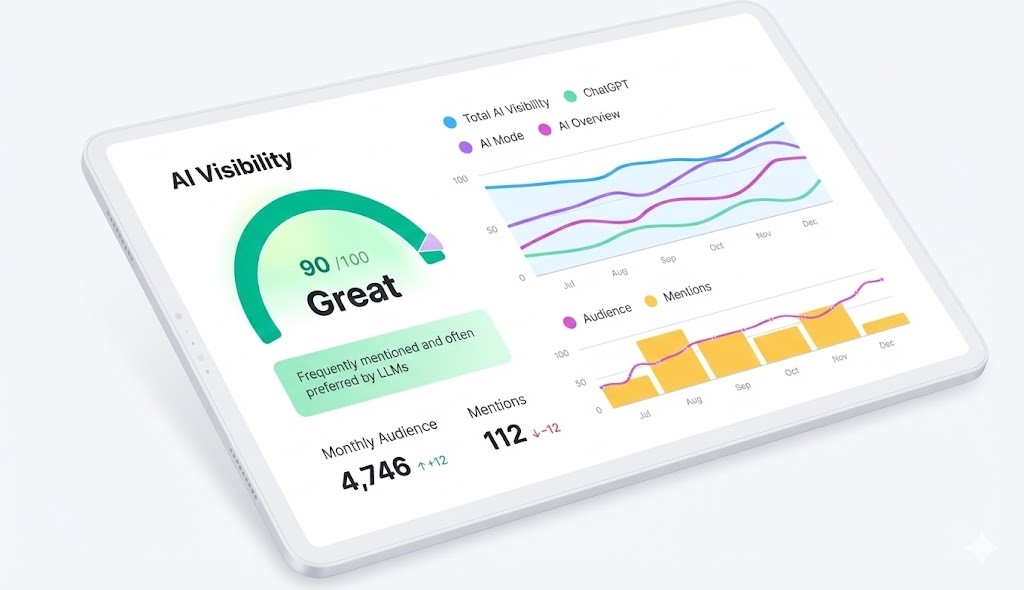
Conduct an AEO Audit to measure citation-specific KPIs, tracking your brand's presence in AI-generated responses to quantify true ecosystem share. You cannot manage what you do not measure, and traditional analytics tools are often blind to these zero-click interactions.
Tools like Yolando can help you monitor the rate at which your brand appears as a source in AI answers across different LLMs, allowing you to quantify your effective share of voice in the new search ecosystem. This metric reveals not just if you rank, but if you are part of the synthesis presented to the user. Shift your KPIs beyond organic traffic rankings to measure how often you are the source of truth, allowing you to value content based on influence rather than just clicks.
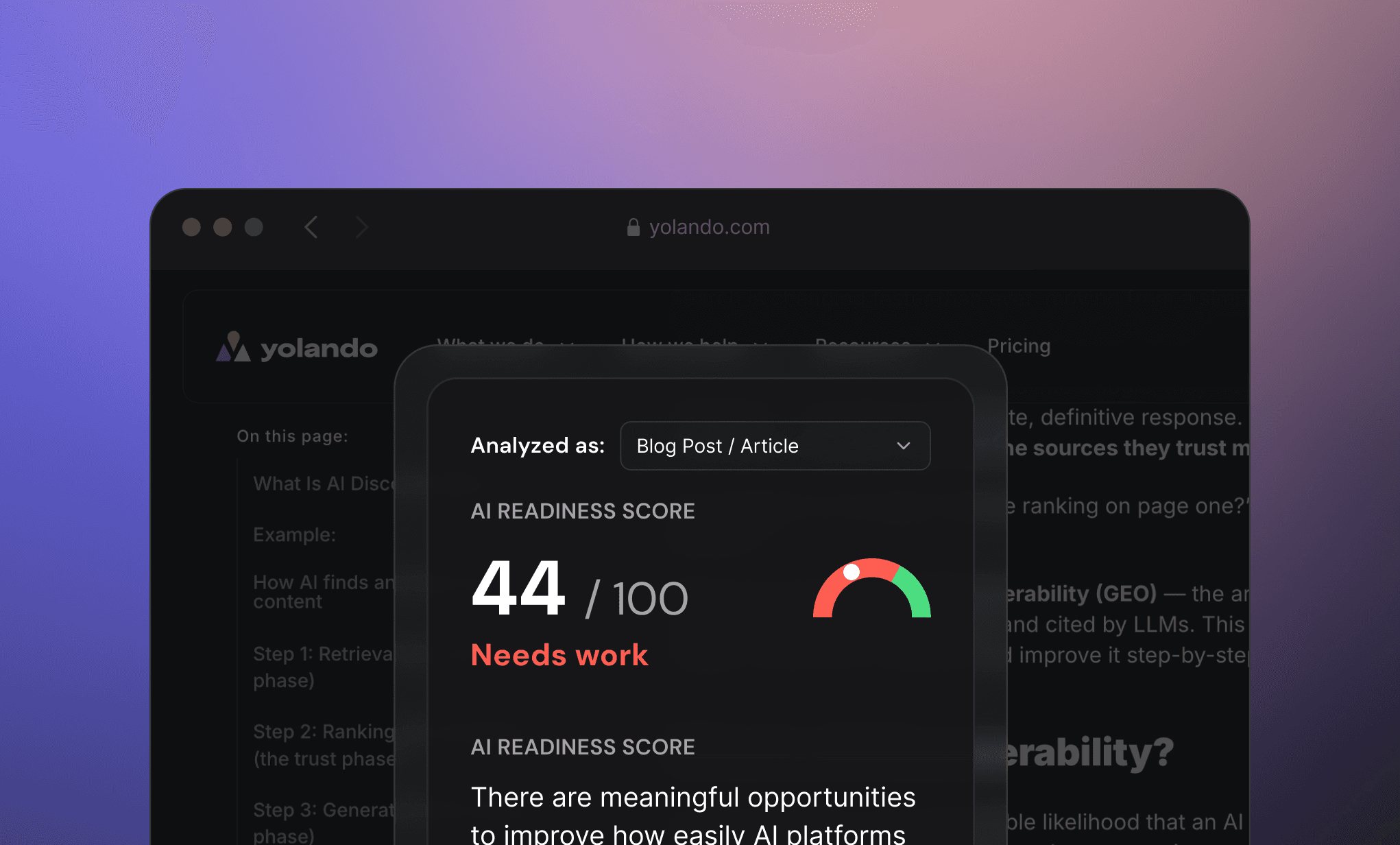
Use tools like Yolando's free content audit Chrome extension to identify SERP features and audit pages for content gaps, ensuring you address the specific queries triggering AI overviews. Tools with features designed to analyze "zero-click" opportunities allow you to see your content through the eyes of the model. Automated audits can instantly highlight missing schema, poor header hierarchy, or low readability scores that might be invisible to a human editor.
Methods & Sources Optimization Protocol: Our recommendations are based on ongoing AEO experiments across ChatGPT, Perplexity, and Gemini. Testing Basis: We tested 500+ URLs across B2B and B2C queries to determine correlation between content structure (schema, header usage, list formatting) and citation frequency. LLM algorithms change frequently; this framework represents current best practices for maximizing retrieval probability as of our latest audit cycle in 2026.
The LLM Optimization Checklist is a validation framework ensuring content meets structural and technical citation standards. Run every high-value page through these criteria before publishing to ensure it is ready to be seen, cited, and chosen.
Structure: Is the core answer visible in the first 100 words?
Formatting: Are H2s/H3s phrased as questions with immediate, direct answers?
Technical: Is Schema markup validated and error-free?
Authority: Are authors clearly identified with verifiable credentials?
Scannability: Are lists, tables, and bolding used to highlight extractable facts?
Independence: Can the key sections stand alone if extracted from the page?