AI SEO & Discoverability
Jan 4, 2026
Photo Credit: iStock
AI assistants are now a real local discovery channel. Top AI chatbots hit 55.2B visits (Apr 2024–Mar 2025), up 80.92% YoY, while traditional search still dominates—so discovery is becoming hybrid, not replaced.
AI is compressing “research → shortlist → decision” into one conversation. Customers increasingly expect curated recommendations (hours, ratings, fit) instead of scrolling links and listings.
Clicks are getting harder to earn. When AI summaries appear, users are less likely to click external links, which makes your listings, reviews, and third-party signals more important than ever.
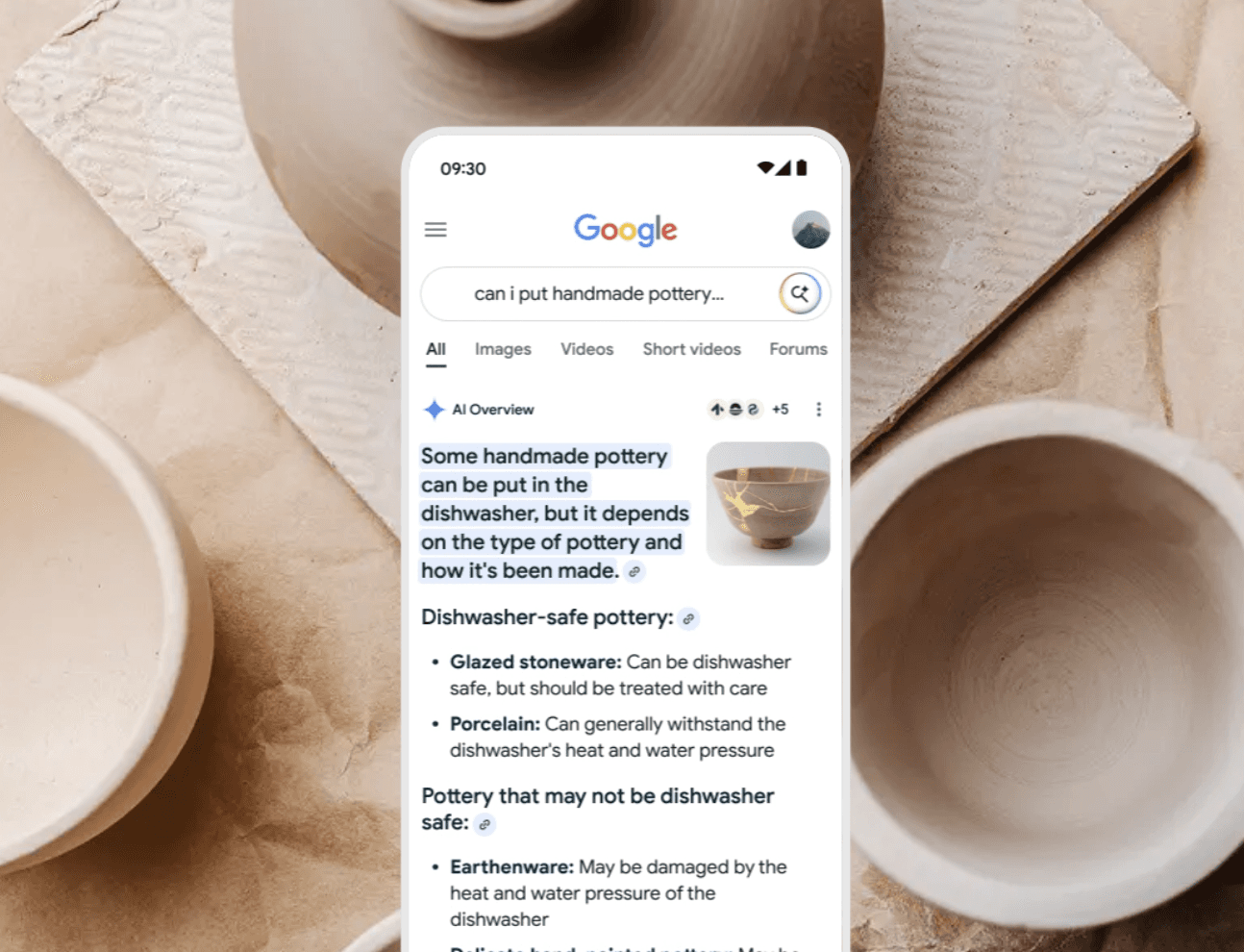
Google is baking AI into search. AI Mode’s rollout and the growth of AI Overviews (reported at 13.14% of queries in March 2025) means the “answer layer” is showing up more often above classic results.
GEO is the new local playbook—and tools help scale it. Strong local SEO still matters, but GEO focuses on being quotable and verifiable so AI recommends you; Yolando helps monitor prompts, share of voice, citations, and generate content to close gaps.
The “front door” to a local business used to be Google Search and Google Maps. If someone needed a dentist, a plumber, or the best tacos nearby, they typed a few words, scanned results, and clicked around.
Now, more of that discovery is happening inside a conversation.
AI assistants like ChatGPT, Google’s Gemini experiences (including AI Overviews and AI Mode), and tools like Perplexity are increasingly giving customers a curated short list—often with context like hours, ratings, and “why this is a good fit.” For marketers, that’s a meaningful shift: you’re not only competing for rankings anymore, you’re competing to become the recommendation.
This article breaks down what’s changing, why it matters for local visibility, and what local businesses can do to stay present in an AI-first discovery layer—especially through Generative Engine Optimization (GEO), the practical extension of SEO into AI answers.
The clearest signal isn’t hype—it’s usage.
Across the top 10 AI chatbots, total visits reached 55.2 billion from April 2024 to March 2025, up 80.92% year over year—a massive jump in a single 12-month window. At the same time, the top 10 search engines still dwarfed that scale at 1.86 trillion visits (only 0.51% down year over year), which tells us something important: AI isn’t “replacing” search overnight—it’s layering on top of it, and growing quickly. [1]
And shoppers are absolutely using these tools in commercial moments. In Adobe’s survey of 5,000 U.S. consumers, 39% said they’ve used generative AI for online shopping, and 53% planned to use it that year. Adobe also reported generative-AI-driven retail traffic was doubling about every two months since September 2024. [2] If consumers are comfortable using AI to decide what to buy, it’s not a big leap for them to use AI to decide who to buy from locally, too.
Local discovery is already showing up in the prompts people use. Birdeye’s analysis of local search behavior notes that asking AI tools for “best dentist in [city]” produces shortlists that include details like hours and ratings—exactly the type of information customers previously gathered by bouncing between Maps, directories, and websites. [3]
Meanwhile, Google is pushing AI deeper into default search behavior. Google announced AI Mode would begin rolling out widely in the U.S. in May 2025, signaling that conversational search won’t stay confined to standalone chat apps. [4]
Traditional local search is still a powerhouse, and marketers should not abandon it.
Google continues to dominate global search traffic, and Statista reported Google at 89.62% of global search traffic. [3] But the experience layer is changing. Instead of ten blue links, customers increasingly expect:
one synthesized answer,
a shortlist,
and follow-up questions that refine recommendations (“Do you want kid-friendly?” “Do you need weekend appointments?”).
This is where AI assistants shine: they compress research into a conversation and reduce the effort required to decide.
And the “old” local behavior still matters because it feeds the AI layer. For example, Backlinko’s user behavior study found that when a Google Map Pack appears, 42% of people searching local terms click on a result inside that Map Pack. [5] That’s huge—because it means your Google Business Profile, reviews, categories, and listing completeness are still among the most valuable assets in the stack.
The emerging reality is hybrid:
customers ask AI for a shortlist,
they sanity-check on Maps/reviews,
then they call, book, or visit.
So the marketing question becomes: Are you showing up in step 1? And if you do show up, is the AI repeating the story you want told?
When AI summaries show up, fewer people click traditional results. Pew Research Center’s analysis of Google search behavior found that users who encountered an AI summary were less likely to click links to other websites than users who did not see one. [6] Search Engine Land’s coverage of this research highlights the same directional effect: AI Overviews suppress clicks to classic listings. [7]
For local businesses, this means:
even if your website is strong,
your “first impression” may happen without a website visit.
Your listing data, reviews, and third-party mentions become more influential, because they’re the raw ingredients AI assistants are drawing from.
Organic search gave you many ways to be discovered: top 3, top 10, “near me” variations, long-tail queries, etc.
AI recommendations tend to produce fewer slots. Even if a user asks for “the best,” the assistant often replies with a short set of options. That tightens competition. Being “pretty good” isn’t always enough—because the AI has to choose what it can confidently recommend.
Semrush reported Google’s AI Overviews appeared in 13.14% of queries in March 2025 (up from 6.49% in January 2025). [8] That’s not just a UI tweak; it’s a shift in how often the “answer layer” sits above traditional results.
If classic SEO was “rank so you earn the click,” GEO is closer to:
“Be the most quotable and verifiable local option, so the AI chooses you as the answer.”
That means optimizing for what AI systems prefer to assemble:
clear, structured information (services, areas served, pricing ranges where appropriate),
consistent entity signals (your brand name, address, phone, categories, and specialties matching everywhere),
strong trust signals (recent reviews, reputable mentions, authoritative pages),
content that answers real questions in plain language (so it can be summarized cleanly).
This is not a reinvention of marketing fundamentals. It’s the same trust-and-clarity game—just scored by a different referee.
Here’s the playbook that tends to move the needle across AI assistants and AI-enhanced search.
AI assistants often rely on the same sources customers use: Google Business Profile, Apple Maps, Yelp, vertical directories, and review platforms. Birdeye emphasizes that AI assistants still depend heavily on these structured sources for local accuracy. [3]
What to do:
audit NAP (name, address, phone) consistency monthly,
keep hours updated (including holiday hours),
pick categories strategically (don’t be vague—be specific),
add services/menus/products where the platform supports it.
AI recommendations are often anchored in social proof. Your goal isn’t only a high average rating—it’s recent evidence that customers choose you and like the experience.
What to do:
set up review requests after key moments (appointment completion, service delivery),
respond to reviews consistently (it signals stewardship and legitimacy),
diversify review sources if your category relies on Yelp/industry sites.
A lot of local sites are either too thin (“We are the best plumber!”) or too generic (“Here are five tips…”). AI systems reward clarity and specificity.
What to do:
add FAQ sections that answer the questions customers actually ask on calls,
write location-specific pages with real differentiators (not copy-paste templates),
include service boundaries (“Serving Scarborough, North York, and Markham…”),
add “how it works” explanations and what customers should expect.
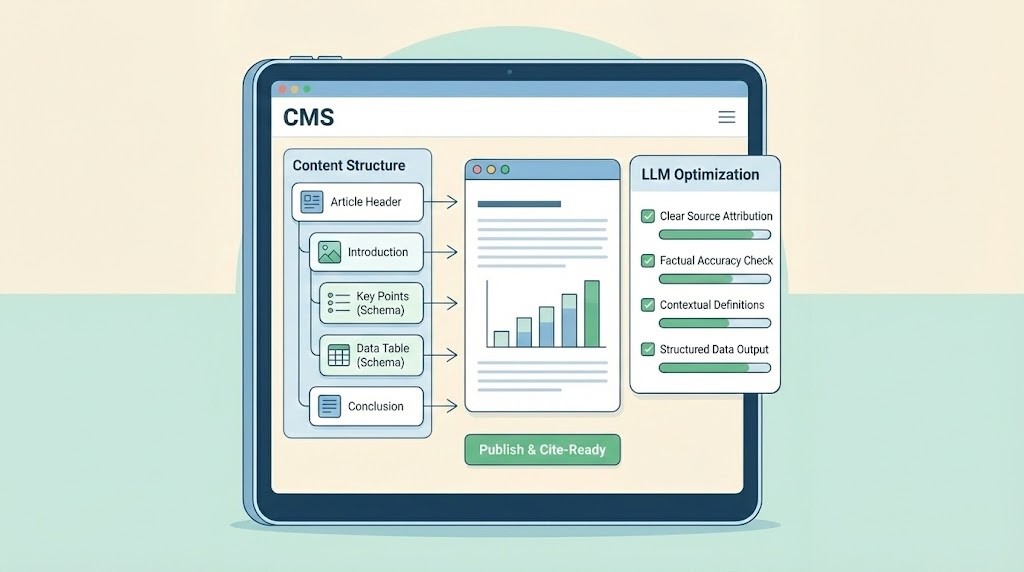
Schema doesn’t guarantee AI citations, but it improves machine readability and reduces ambiguity—especially for LocalBusiness, Review, FAQ, and Service.
Most marketers track rankings and Map Pack performance. Now add:
Do AI assistants mention us for category prompts?
Are we recommended for the right services?
Are the details accurate (hours, specialties, pricing approach)?
Which competitors show up when we don’t?
This is where platforms built for AI visibility come in.
If you’re a single-location shop, you can run a manual AI audit now and then. But once you have multiple locations, services, or real competition, AI visibility becomes too dynamic to manage by hand—answers vary by platform, prompt phrasing, and time.
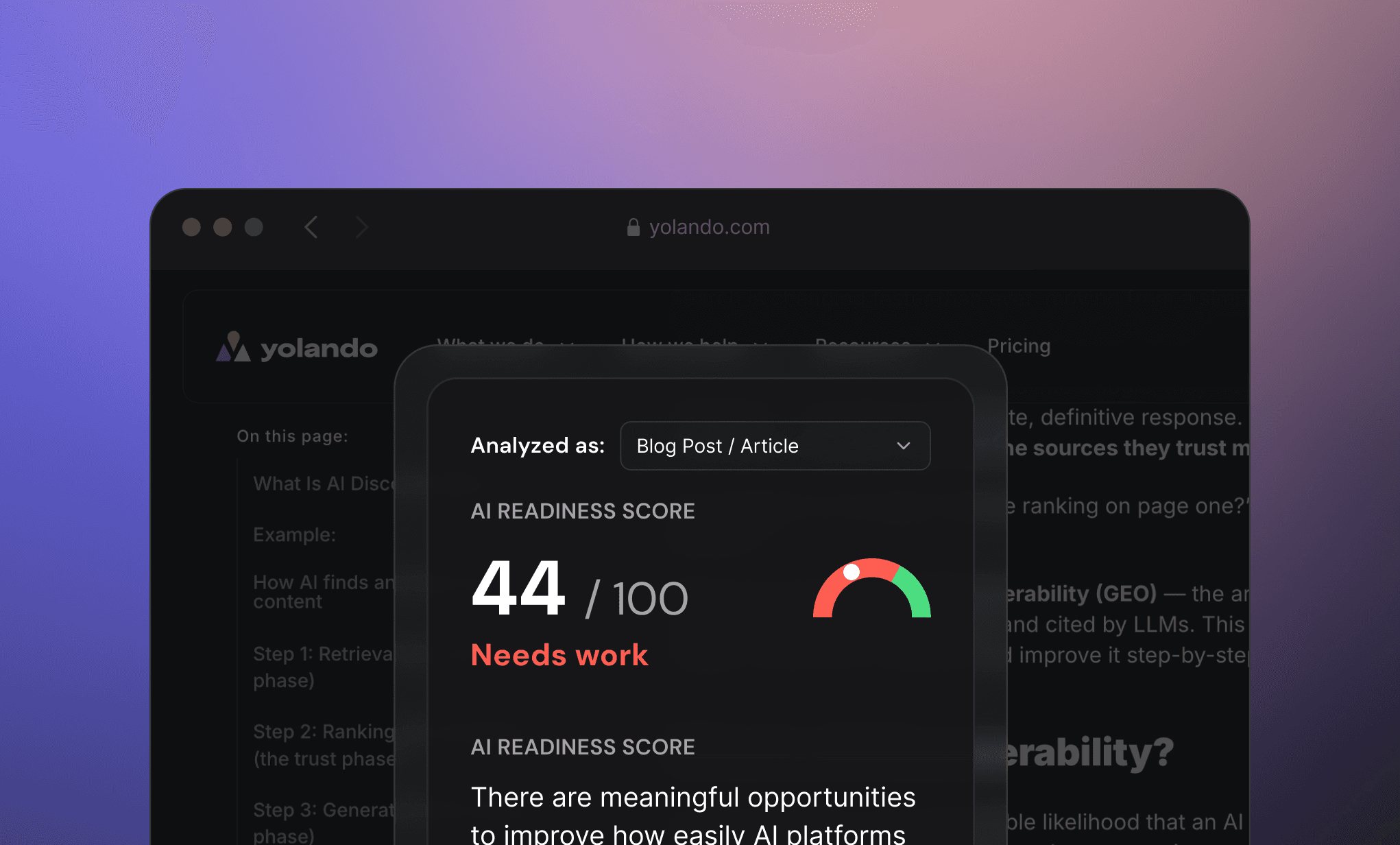
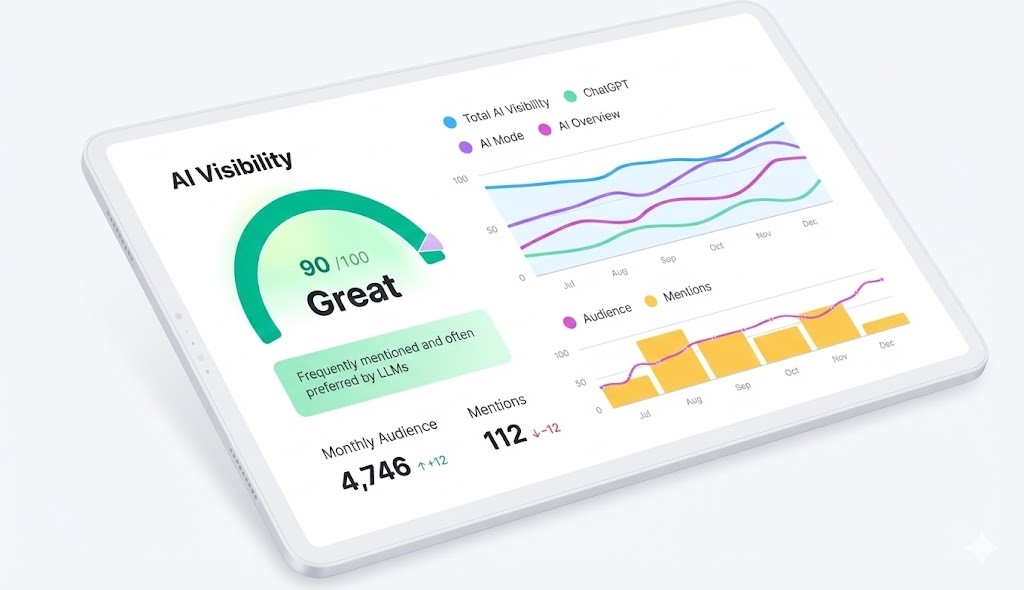
That’s where Yolando fits: a GEO command center that helps you understand how AI describes your brand, why you’re showing up (or not), and what to do about it—using structured knowledge and content actions. [9]
Platforms like Yolando are helpful because they:
monitor prompts at scale across assistants (so you’re not relying on spot checks),
track share of voice (who gets recommended and where you’re missing),
surface citation patterns (which sites and listings are shaping the AI’s answer), and
turn gaps into content priorities—and help you create the content (briefs and on-brand drafts) needed to actually move those AI answers. [9]
If you’re serious about GEO, this measure → fix → re-measure loop is what makes AI visibility a repeatable marketing program—not a guessing game.
Local discovery isn’t leaving Google—but it’s no longer confined to rankings and Map Pack placement. AI assistants are becoming a meaningful first touchpoint for recommendations, and Google is accelerating that shift by embedding AI deeper into Search experiences. [4], [8]
For local businesses, the opportunity is straightforward:
keep your foundational local SEO strong (listings + reviews),
make your brand easy for machines to understand (structure + consistency),
and optimize for being the answer, not just a result.
Because in an AI-driven journey, the customer may meet your brand for the first time through a sentence an assistant says out loud. Your job—your marketing advantage—is to make sure that sentence includes you, and gets you right.
OneLittleWeb, “AI Chatbots vs Search Engines: 24-Month Study on Traffic Trends,” 2025. https://onelittleweb.com/data-studies/ai-chatbots-vs-search-engines/
Adobe Blog, “Adobe Analytics: Traffic to U.S. retail websites from Generative AI sources jumps 1200 percent,” Mar. 17, 2025. https://blog.adobe.com/en/publish/2025/03/17/adobe-analytics-traffic-to-us-retail-websites-from-generative-ai-sources-jumps-1200-percent
Birdeye, “How AI assistants are impacting local search in 2026,” updated Nov. 20, 2025. https://birdeye.com/blog/impact-of-ai-local-search/
Google, “AI Mode in Google Search: Updates from Google I/O 2025,” May 2025. https://blog.google/products/search/google-search-ai-mode-update/
Backlinko, “How People Use Google Search (New User Behavior Study),” 2025.https://backlinko.com/google-user-behavior
Pew Research Center, “Google users are less likely to click on links when an AI summary appears in the results,” Jul. 22, 2025. https://www.pewresearch.org/short-reads/2025/07/22/google-users-are-less-likely-to-click-on-links-when-an-ai-summary-appears-in-the-results/
Search Engine Land, “Google’s AI Overviews are hurting clicks: Pew study,” Jul. 2025. https://searchengineland.com/google-ai-overviews-hurting-clicks-study-459434
Semrush, “Semrush Report: AI Overviews’ Impact on Search in 2025,” 2025. https://www.semrush.com/blog/semrush-ai-overviews-study/
Yolando, “Discovery Moved to AI. Your Strategy Has to Move With It,” 2025. https://yolando.com/blog/discovery-moved-to-ai-your-strategy-has-to-move-with-it