
AI SEO & Discoverability
Jan 4, 2026
SEO got you ranked — structure gets you cited. Welcome to the new era of AI visibility, where content earns attribution, not just clicks. Photo Credit: Adobe Stock
AI assistants favor clearly structured, extractable statements, not dense narrative. Structure is the new authority signal for AI.
Schema markup (especially FAQPage, Article, HowTo) significantly improves your eligibility for AI citations by providing machine-readable context.
Use atomic headlines & question/answer blocks so AI can lift your content verbatim, creating high-confidence snippets.
Success is measured in AI citation share, not just pageviews, making it the new competitive KPI.
Begin with a focused audit of high-impact pages; build AI-friendly templates into your content creation workflow from day one
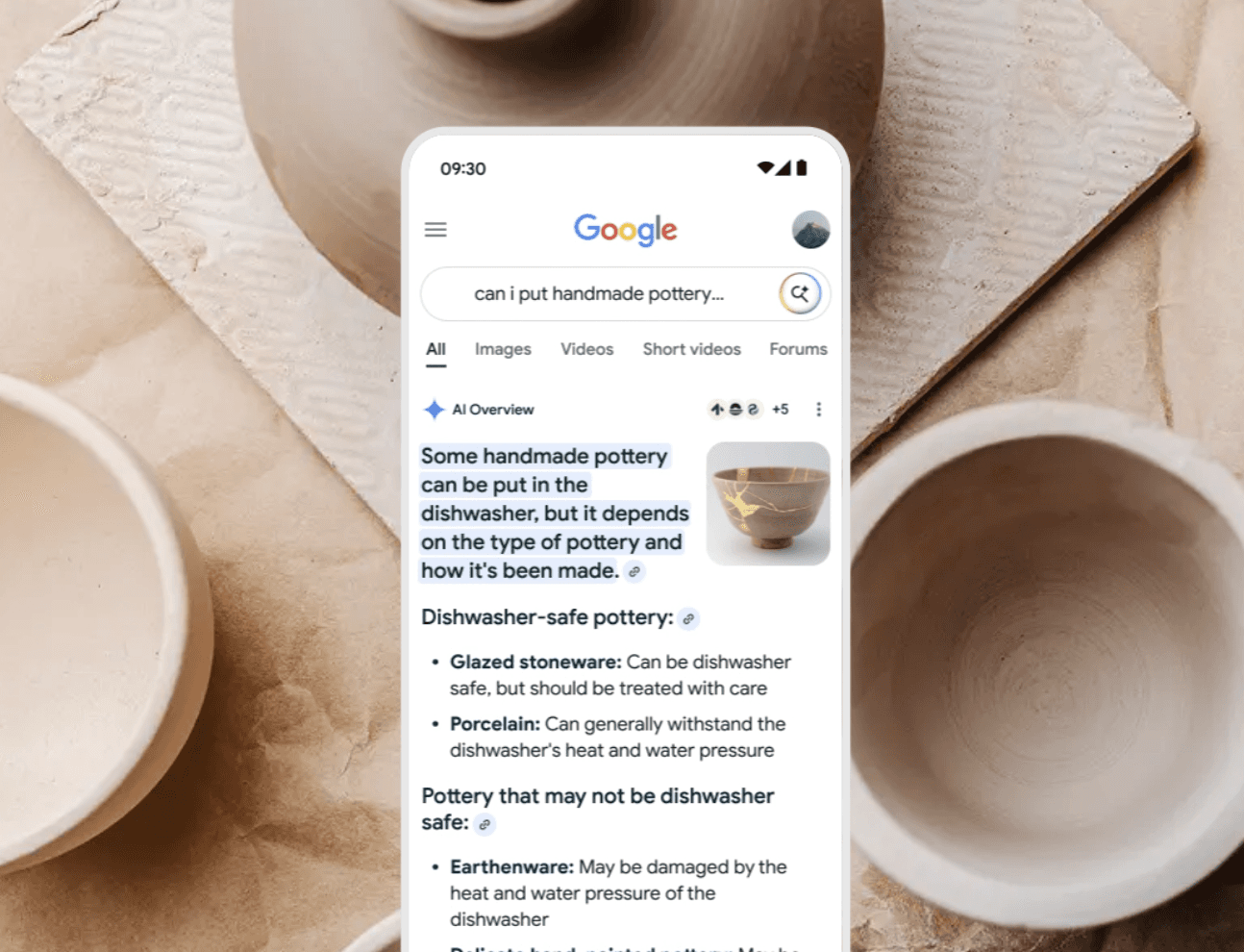
Search is evolving into a conversational discovery paradigm. Many AI assistants rely on Retrieval-Augmented Generation (RAG): they gather relevant text segments from indexed sources, then synthesize user responses. That means your content must be both discoverable and structured for extraction.
Even a top-ranked page can be ignored if its content is poorly divided, buried, or lacks clarity for AI systems. Visibility in AI responses requires designing for extraction, not just writing for humans. This is the shift from Search Engine Optimization (SEO) to Generative Engine Optimization (GEO).
In cross-domain research, content structure was a stronger predictor of AI citations than schema presence alone [1]. Domains with cleanly segmented, semantically clear content saw higher lift, confirming that the internal organization of the content is paramount.
Signal | Description | Impact on AI Extraction |
Heading Hierarchy | Clearly signals the topic flow. | Defines conceptual boundaries, allowing AI to isolate a relevant sub-topic [2]. |
Self-Contained Paragraphs | Each block conveys a single, complete idea (the "atomic unit"). | Ideal for extraction; AI can lift it without needing surrounding context [2][3]. |
Lists, Tables, Bullets | Used for comparisons, sequences, or key facts. | AI sees these as structured data and frequently surfaces them to answer direct queries (e.g., "List the steps..."). |
Answer-First Sentences | Beginning a paragraph with the key point or summary. | Increases the chance of that first sentence being lifted as a definitive snippet [3]. |
Entity Clarity & Redundancy | Reinforce core terms (e.g., repeating the brand name, product name) in proximity. | Helps AI disambiguate the subject matter and increases the confidence of the citation. |
When you use these patterns, you make your content eligible, not just readable, for confident AI consumption.
Schema markup provides machine-readable context and signals to AI systems about what your content is and how it's structured. It does not guarantee citation but significantly increases the probability of being chosen when AI is selecting snippets [4].
Schema Type | Use Case | AI Benefit | Example |
FAQPage | Q&A sections, common user questions. | Highest-yield for ready-to-lift answers. | Wrap visible Q&A on a pricing page so AI can quote "How is the pricing calculated?" |
Article/BlogPosting | Core long-form articles. | Signals content boundaries, author, and publish date, strengthening trust signals. | A complex analysis post marked BlogPosting helps AI identify title, author, and publish date. |
HowTo | Step-by-step guides, procedural content. | Highlights procedural content, allowing AI to lift sequential steps reliably. | A "How to structure a landing page for AI" article gets section-lift when AI needs a step list. |
VideoObject | Pages with embedded videos. | AI may reference specific timestamps or use the object's description for context. | A tutorial video page uses VideoObject so AI can cite "at 2:15, step three is explained." |
Organization/LocalBusiness | Brand or location-based pages. | Anchors entity identity, helping AI resolve "which X brand said this?" queries. | Marking brand pages helps AI resolve "which X brand said this?" queries. |
Use JSON-LD format: This is Google's preferred method, offering clean separation of structure and content via a script block [5].
Ensure On-Page Parity: The text in your schema must match visible on-page content exactly [7]. Systems may distrust or ignore the markup entirely if it acts as "ghost content."
Validate Constantly: Use tools like Google's Rich Results Test or the Schema Markup Validator.
Prioritize: Start with your high-impact content (guides, core value pages, high-traffic FAQs).
Include Trust Signals: Augment schema with author, publisher, and datePublished fields. AI, like search, relies on these for E-E-A-T (Experience, Expertise, Authoritativeness, Trustworthiness) signals.
Pages with schema markup also tend to get longer snippet "visibility quotas," meaning they're more consistently cited across multiple AI sessions [4].
While structure is key for eligibility, trust is key for selection. AI models evaluate the reliability of a source before lifting its content.
Deepen the Article Schema: Emphasize the importance of the author, publisher, and dateModified properties within Article and BlogPosting schema. Content with clear authorship and recent updates signals higher Expertise and Trustworthiness.
Cite Primary Sources: Encourage linking to primary sources, research papers, or original data within the content. This practice signals Expertise and Authority to both human readers and AI models.
Source Citation Templates: Suggest creating a standardized template for citing original research or data points (e.g., placing the citation in brackets immediately after the key statistic or claim). This makes the source relationship crystal clear for AI.
Headings should communicate the idea, not generic labels. For example:
Weak for AI | Strong for AI | Why it works |
❌ "Summary" | ✅ "Key Takeaways for AI Visibility" | Directly states the topic, creating a clean landmark for AI extraction. |
❌ "Features" | ✅ "How FAQ Pages Increase AI Quote Likelihood" | Converts a generic label into an explicit concept boundary. |
Models use headings as structural guides to parse and lift content. [2]
FAQ sections, paired with FAQPage schema, remain some of the highest-yield segments for AI citations. Hyve describes them as your "best shot" at conversational visibility. [1]
Tips for writing AI-friendly FAQs:
Use real user queries (from support logs, search data, or audience surveys).
Keep answers concise, ideally under 50 words for maximum liftability.
Don't hide them behind collapsibles or accordions unless absolutely necessary (visible content is always preferred).
Ensure the Q&A is self-contained: it should make sense even if the surrounding text isn't included.
Break content into modular, standalone blocks, each delivering one clear idea. Structure the paragraph by placing a lead summary sentence (the key takeaway), then supporting content. This ensures that even if AI lifts only the first sentence, the core answer is conveyed.
Your content becomes a distributor, not just a destination. When AI assistants quote your insights, your brand is front and center, even when users don't click through. This is how you win in a zero-click environment, ensuring your intellectual property is the authoritative source.
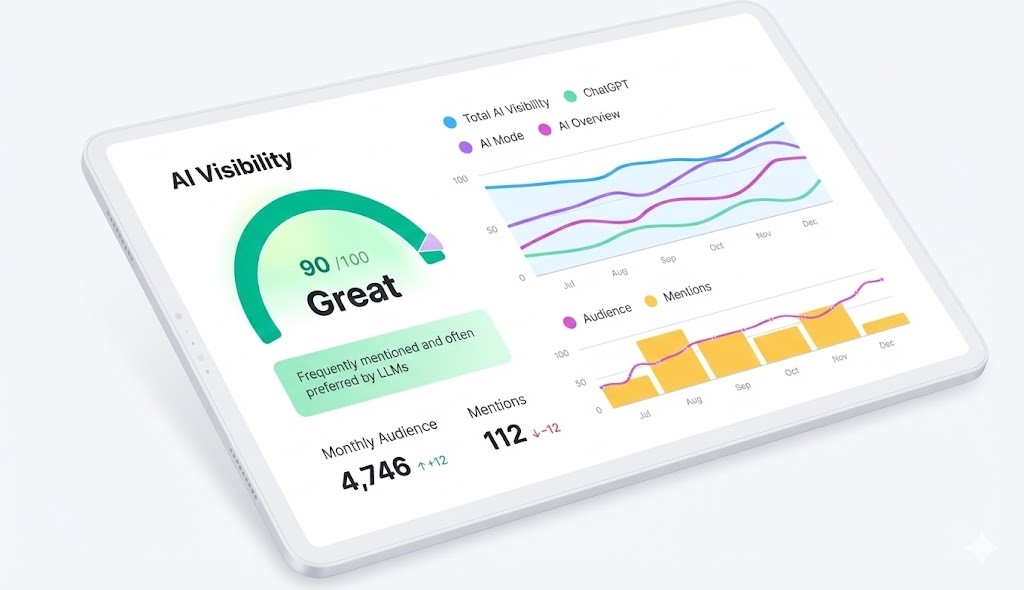
Pageviews, sessions, and bounce rates won’t fully capture this impact. You must shift your measurement framework. You’ll need tools that measure:
AI Citation Volume: The raw count of times your brand or content is cited.
Snippet Share: The percentage of AI responses in a given topic where your content is the source.
Attribution Quality: Is AI citing the author, the source, or the brand?
Impression Lift: Tracking brand mentions on conversational surfaces.
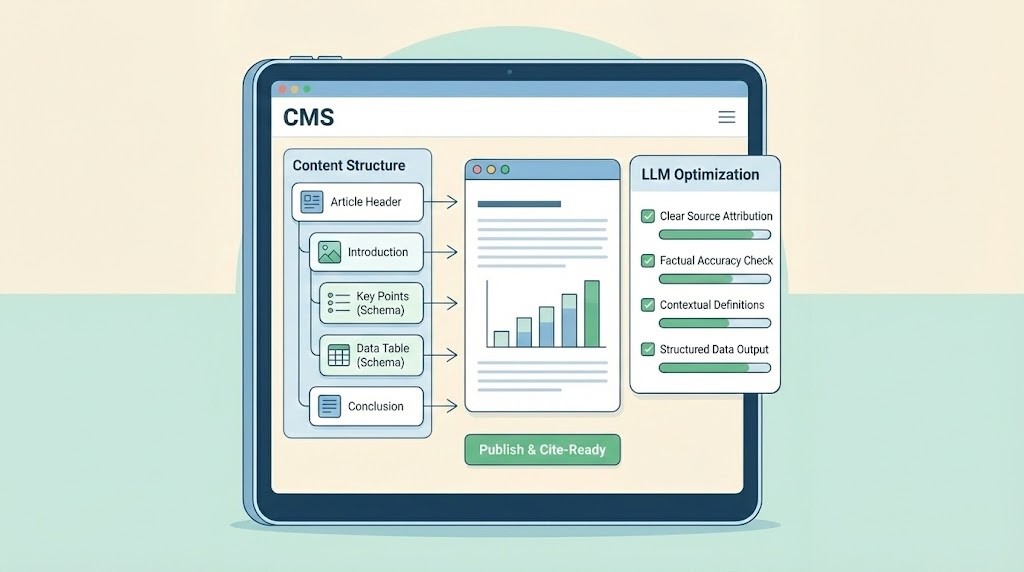
CMS, content platforms, and recommendation engines should embed schema-first content building and atomic structures. These capabilities are no longer optional, they are core requirements. Content templates should enforce structure (e.g., dedicated fields for the "answer-first sentence" or auto-generating schema from an FAQ block). Retrofitting structure later is costly.
When content is modular and semantically tagged, AI can recombine it into highly tailored user responses. If your HowTo guide is broken into 10 atomic steps, an AI can pick only the three steps relevant to a user's specific context. Structuring unlocks this flexible AI reuse and allows for true content personalization at scale.
If your team standardizes on AI-friendly templates and formats, the creative work shifts to narrative strength, insight depth, and differentiation, not tedious formatting overhead. Structure becomes a tool for clarity, not a technical chore.
Schema mismatch or errors can confuse AI or validators.
Over-fragmentation may damage narrative cohesion and human reader experience.
Schema drift means metadata must be maintained as content changes.
Model evolution means extraction heuristics may shift over time.
Even perfect structure doesn't guarantee citation, relevance, authority, and timing still matter.
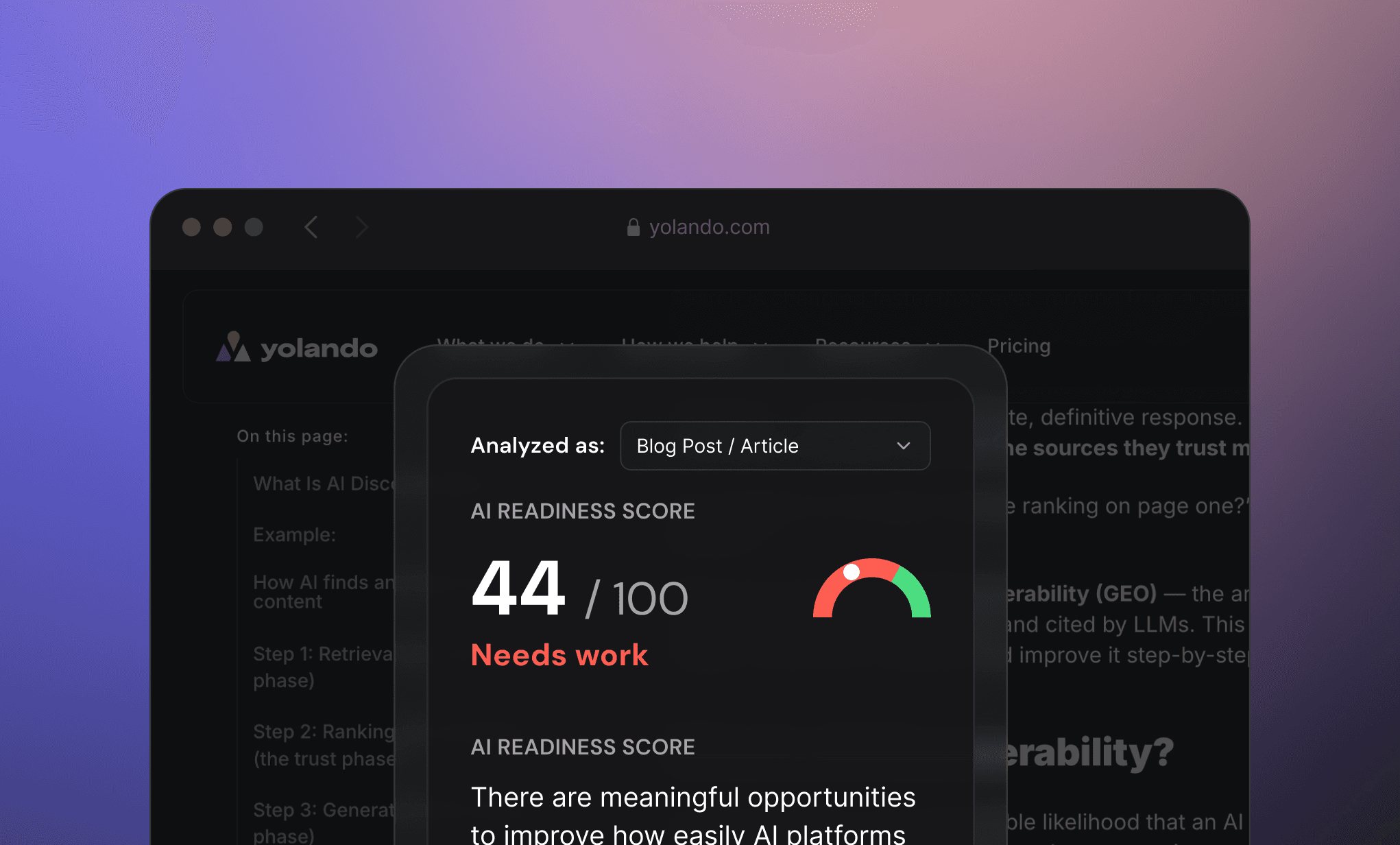
AI-Visibility Audit: Assess your top 20 business-critical pages for heading clarity, schema presence, and modular block structure.
Refactor Templates: Update your CMS templates to support answer-first sentences, modular blocks, and built-in, visible FAQ zones that automatically generate schema.
Apply Schema Markup: Focus on high-impact pages, FAQPage, Article, HowTo, and ensure trust signals (author, date) are included.
Define and Track New KPIs: Officially adopt AI citation share and snippet lift as core metrics for content performance.
Train Writers and Editors: Formalize training on AI-aware writing: brief, precise, modular content that respects the new structural rules.
Iterate & Test: Experiment with different headings, reordering blocks, or adding new FAQ items, and measure how citation share changes rapidly.
We are past the point where structure is optional, now it's expected.
The era of Generative Engine Optimization (GEO) demands a dual focus: write for human readers while explicitly structuring for machine extraction. By committing to clean atomic blocks, purposeful headlines, and consistent schema markup, you move your content from the vast, undifferentiated sea of indexed pages to the elite tier of quotable, high-confidence sources. This structural commitment transforms your content from a point-of-click destination into a distributed brand impression.
In the new discovery landscape, visibility is earned not by rank, but by attribution. Begin your audit today, refactor your templates tomorrow, and start measuring AI citation share as your most valuable competitive metric.
Arlen, “The AI Citation Game: Why Your Content Is Invisible to ChatGPT (And How to Fix It),” Medium, Sep. 2025. https://medium.com/@arlen1788/the-ai-citation-game-why-your-content-is-invisible-to-chatgpt-and-how-to-fix-it-a7cb999f252a
Writesonic, “How LLMs Interpret Content and How to Structure Content for AI Search,” Writesonic Blog, Sep. 2025. https://writesonic.com/blog/how-llms-interpret-content
StoryChief, “How to Structure Your Content So LLMs Are More Likely to Cite You,” StoryChief Blog, Oct. 2025. https://storychief.io/blog/how-to-structure-your-content-so-llms-are-more-likely-to-cite-you
A. S. C. S. Search Engine Land, “Schema and AI Overviews: Does structured data improve visibility?,” Search Engine Land, Sep. 2025. https://searchengineland.com/schema-ai-overviews-structured-data-visibility-462353
Google Search Central, “Mark Up FAQs with Structured Data,” Google Developers Documentation, 2025. https://developers.google.com/search/docs/appearance/structured-data/faqpage
Deque Systems, “Elements must have their visible text as part of their accessible name,” Deque University, 2024. https://dequeuniversity.com/rules/axe/4.7/label-content-name-mismatch