LLM Watch
Jan 28, 2026
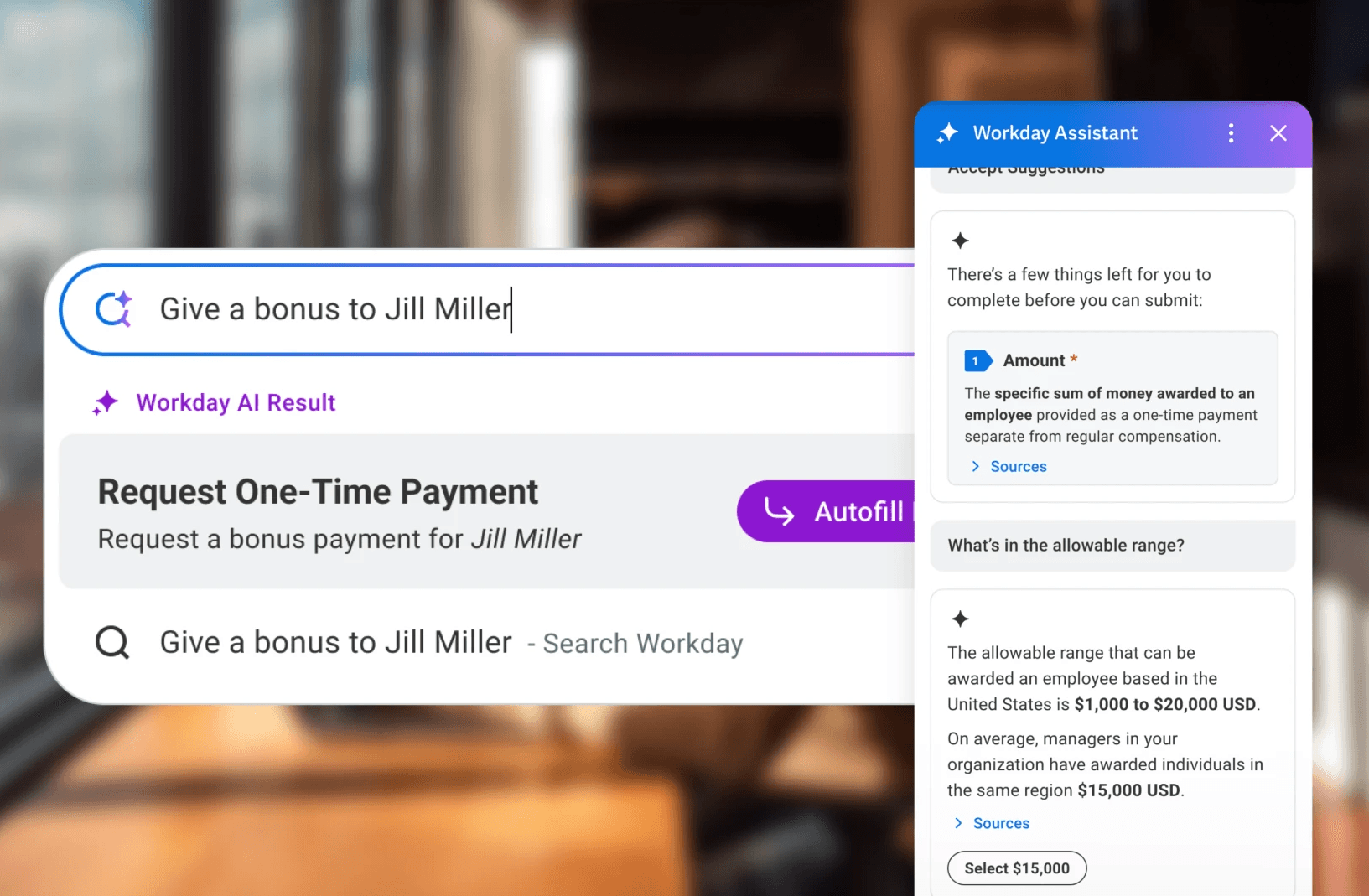
Workday’s new AI agent marks a turning point for enterprises, reshaping how companies make decisions and how employees grow their careers.
Workday introduced the Agent System of Record (ASOR), a platform that manages AI agents like employees, covering onboarding, role and permission setup, monitoring, auditing, and retirement.
Censia released the first ASOR-compatible agent, the Talent Landscape, Benchmarking & Strategy Agent, which analyzes workforce data, benchmarks it against market trends, identifies skills gaps, forecasts attrition, and recommends strategic actions.
ASOR enables agents to access and analyze cross-department data from HR, finance, and operations within a unified governance and compliance framework.
Workday also launched an Agent Partner Network, allowing companies to deploy pre-built agents for key business functions such as payroll, finance, compliance, and analytics.
Workday just redefined what it means to “hire” an AI.
Not as a tool, but as a teammate, one that can make decisions, learn from data, and manage tasks once handled by people. It doesn’t clock in or take a lunch break, but it’s designed to collaborate, predict, and even influence how teams operate. This marks a turning point in enterprise software, where AI isn’t just assisting work anymore; it’s becoming part of the workforce itself.
In early 2025, Workday unveiled what it calls an Agent System of Record (ASOR), a central platform where companies can manage AI agents as if they were digital employees. In plain English: it’s an HR system for artificial intelligence. Agents can be onboarded, assigned roles, given permissions, monitored, and even “retired” under the same governance structure that manages human workers [1].
This architecture is the foundation for a new generation of intelligent systems, and it’s already being populated. Censia, a workforce intelligence company, recently launched the first agent built specifically for Workday’s ASOR: the Talent Landscape, Benchmarking & Strategy Agent [3].
Unlike the average chatbot, this agent doesn’t wait for commands. It analyzes a company’s workforce data, compares it to market benchmarks, identifies skills gaps, forecasts attrition risks, and suggests strategies, such as re-skilling or internal transfers, to keep talent pipelines strong [2].
Because it’s built within the ASOR framework, it can pull live data from Workday, respect compliance and access rules, and operate under full auditability. It’s not a plugin. It’s a digital coworker, governed, traceable, and accountable.
This development isn’t just another step in HR automation, it’s a structural shift that affects how organizations plan, act, and adapt.
Historically, HR data has been retrospective. Reports show what happened last quarter; executives then decide what to do. AI agents invert that flow. They interpret trends in real time, make recommendations before issues escalate, and can even simulate scenarios (e.g. “what if we lose 10% of our data engineers?”). That means decision-making compresses from months to hours.
Because agents live inside Workday’s ASOR, they can access data across departments, HR, finance, operations, without the patchwork of integrations that usually slow things down. For example, an agent could connect hiring decisions to budget forecasts or link attrition trends to workload data, building a unified picture of organizational health [1].
Agents take over repetitive and time-intensive processes, compliance checks, internal benchmarking, reporting, that typically consume HR analysts’ hours. That frees humans to focus on culture, engagement, and high-stakes decisions. Companies could reallocate budgets from routine operations to innovation and workforce development.
A common fear with enterprise AI is losing control, invisible algorithms making opaque decisions. ASOR is designed to prevent that. Every agent has defined permissions, logging, and oversight mechanisms. Executives can track what data it accessed, what decisions it influenced, and how it performed. This makes it possible to audit AI actions the same way you’d review an employee’s output [1][3]
Workday has opened its Agent Partner Network, allowing companies to source pre-built agents, for payroll, finance, compliance, or analytics, from trusted vendors. This effectively creates a marketplace for AI labor, where enterprises can “hire” agents as they would consultants or contractors, but at machine speed and scale [1].
While this might sound like an operations story, the ripple effects reach directly into how people build and sustain careers.
Agents like Censia’s operate on structured skill taxonomies, databases that map every employee’s capabilities, certifications, and project history. When done right, this means workers can discover internal opportunities they didn’t know existed, matched to their evolving skill sets [2]. The opaque internal hiring process could become data-driven and fairer.
By tracking emerging industry trends and internal needs, agents can proactively suggest learning paths or training programs. Imagine an AI system telling you: “You’re 80% qualified for this new analytics role, complete these two certifications to qualify.” That turns passive performance tracking into active career development.
If implemented well, agents can explain why decisions were made, which skills drove a promotion or a hire. But if mismanaged, they could become the opposite: inscrutable algorithms that reinforce bias. Workers might feel they’re being judged by an unseen entity, especially if results aren’t clearly communicated or audited.
As agents take over repetitive or analytical tasks, human roles will shift toward interpretation, collaboration, and creativity. Workers who adapt, learning how to oversee, challenge, or complement AI systems, will thrive. Those who resist change risk obsolescence.
Bias, fairness, and privacy aren’t side concerns anymore, they’re boardroom issues. Agents that misinterpret data could amplify inequality or misclassify talent. Companies will need governance teams, not just IT departments, to ensure these systems operate transparently and equitably.
The evolution of AI in business has followed three stages:
Recognition and Generation — systems that see (detect patterns) or speak (generate text).
Automation and Workflows — bots that follow rules, like RPA (robotic process automation).
Agentic AI — systems that plan, decide, and act autonomously across tasks.
Workday’s ASOR and Censia’s launch mark the first mainstream enterprise implementation of that third stage. It’s a shift from using AI as a tool to managing it as a colleague.
But this evolution also means AI is moving from experimental novelty to operational infrastructure. Companies will need governance frameworks, audit systems, and even ethical review boards just as they once built HR departments for human labor. The “digital workforce” will need management, too.
That elevator headline wasn’t just a screen saver, it was a glimpse of the next phase of work. Workday’s agent ecosystem could make companies faster, more informed, and more adaptive. It could help workers find better paths and reduce friction in how talent is managed.
But it also raises hard questions about accountability, equity, and the human role in an increasingly agentic workplace.
AI is no longer a buzzword in PowerPoint decks. It’s showing up for work, and it just got an employee badge.
Workday, “The Next Generation of Workforce Management is Here: Workday Unveils New Agent System of Record,” Workday Newsroom, Feb. 11, 2025. https://newsroom.workday.com/2025-02-11-The-Next-Generation-of-Workforce-Management-is-Here-Workday-Unveils-New-Agent-System-of-Record
Censia, “AI Agents That Turn Skills Into Strategy,” Censia Blog. https://www.censia.com/blog/ai-agents-that-turn-skills-into-strategy/
“Censia Unveils Next-Gen AI Agent Purpose-Built for Workday,” Newsfile Corp., Oct. 2, 2025. https://www.newsfilecorp.com/release/268717/Censia-Unveils-NextGen-AI-Agent-PurposeBuilt-for-Workday