
AI SEO & Discoverability
Jan 4, 2026
Photo Credit: Freepix
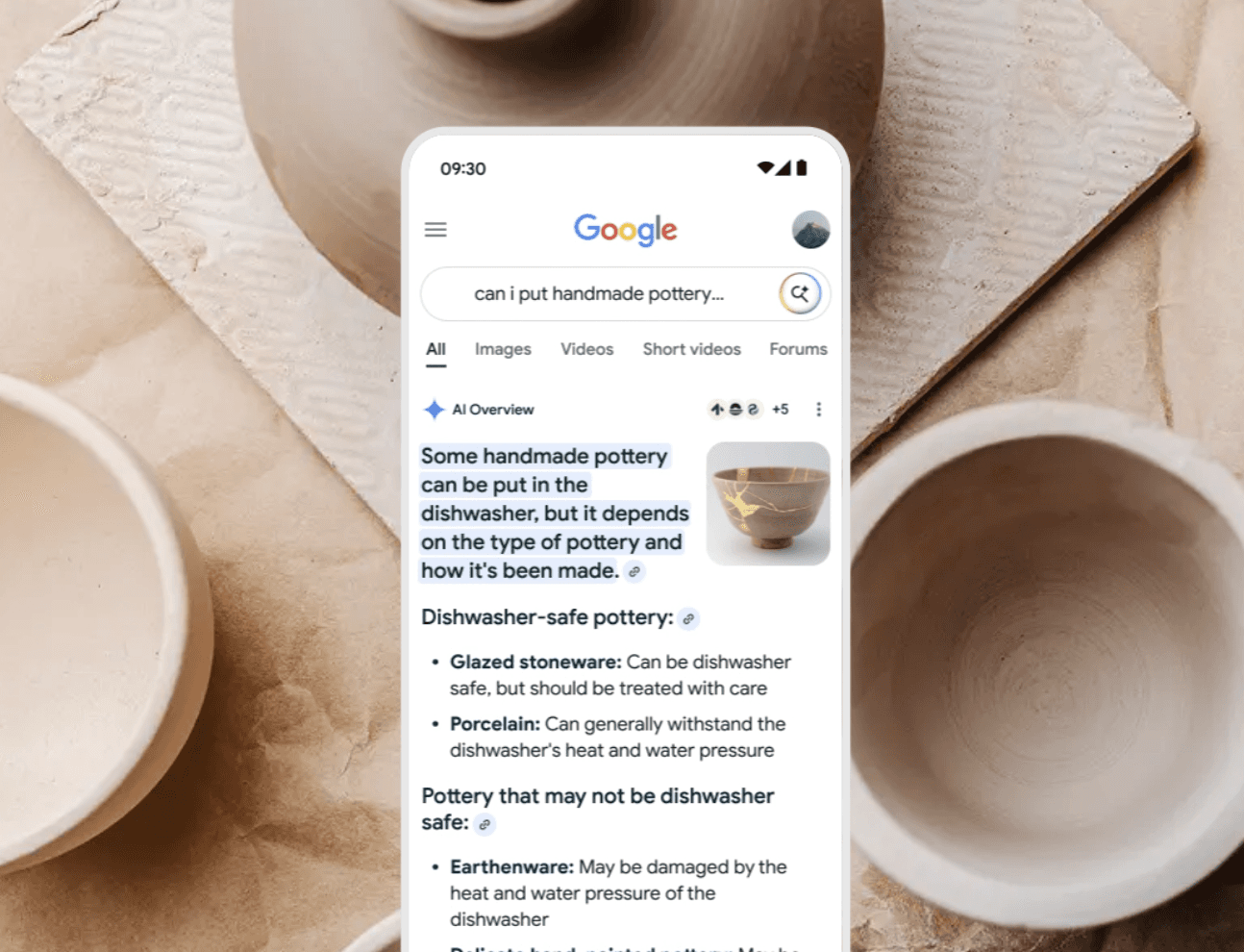
Buyers now discover and evaluate brands inside ChatGPT, Gemini, and Perplexity—not just Google—so AI answers can shape perception before a site visit.
An AI visibility audit measures: mentions, share of voice vs competitors, accuracy, sentiment/framing, and which sources shape the answer.
Manual audits work to build intuition, but the prompt × platform × variation matrix explodes fast and answers change over time.
Tracking becomes subjective and stale unless you repeat audits on a cadence with consistent scoring.
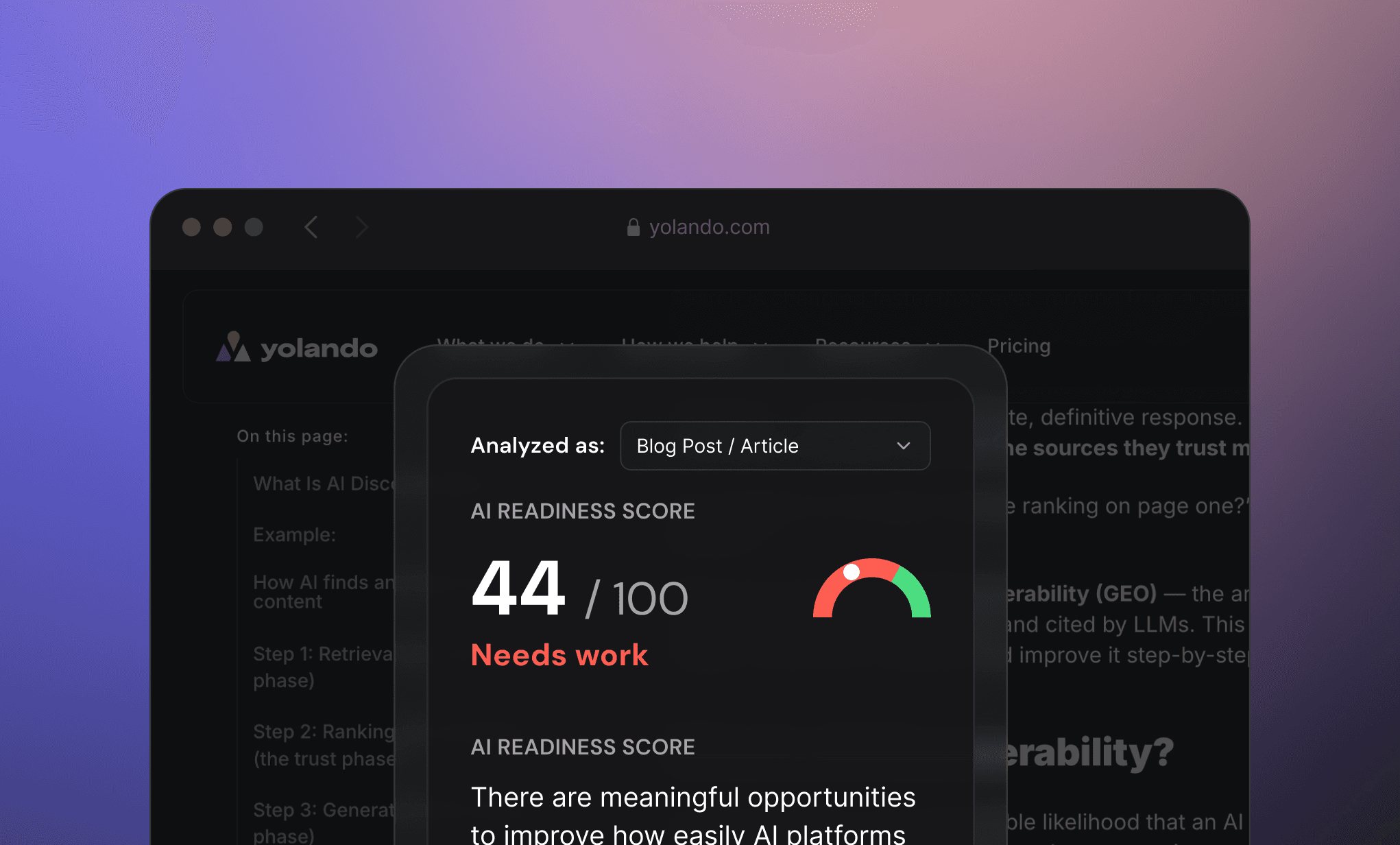
Platforms like Yolando operationalize audits with structured prompts, automated runs, AI-native metrics (e.g., share of voice), and action paths.
In the age of conversational AI, the front door to your brand isn’t a search bar—it’s a chat. Buyers are increasingly asking ChatGPT, Google’s Gemini, and Perplexity for recommendations, comparisons, and “what should I do?” guidance. And what those AI-generated answers say (or don’t say) about your company can shape brand perception long before someone lands on your site.
This isn’t hypothetical. In an Adobe survey, 36% of respondents said they discovered a new product or brand through ChatGPT, with even higher rates among younger audiences (Gen Z). [1] The same Adobe report also found 47% of marketers and business owners use ChatGPT to market or promote their business, and two in three plan to increase their focus on AI visibility in 2025. [1] In other words, marketers are already treating AI answers as a real channel—because customers are already using them that way.
So how do you make sure your brand is visible and accurately represented in these systems? You start with an audit. This guide walks through
how to audit your brand manually across ChatGPT, Gemini, and Perplexity
why the manual approach breaks at scale, and
how platforms like Yolando can automate the work and help you turn audit findings into action.
An AI visibility audit is the AI-era cousin of an SEO audit—except the “results page” is a single answer, not 10 links. Ahrefs defines an AI visibility audit as a structured way to assess where your brand is mentioned in AI search platforms, how often, how accurately, and based on which sources. [2] That last part—sources—is the key. AI answers don’t come from nowhere; they’re shaped by what the models can retrieve, verify, and summarize.
A strong audit typically tracks:
Visibility: Do you show up for the prompts that matter?
Share of voice: Do competitors dominate category answers?
Accuracy: Are details correct (products, claims, positioning, availability)?
Sentiment / framing: Are you recommended confidently, neutrally, or with caveats?
Source footprint: Which websites are driving the AI’s narrative—yours or someone else’s? [2]
If you don’t have a dedicated platform, you can absolutely begin manually. It’s the fastest way to build intuition about what AI “thinks” about your category—and where your brand is missing.
Start with prompts that map to your funnel, not your internal org chart. Marketers often begin with “who we are” queries, but the bigger win usually comes from unbranded prompts where buyers are choosing between options.
Create three prompt buckets:
Category discovery prompts (unbranded)
“Best [category] for [use case]”
“Top alternatives to [competitor]”
“What should I look for in a [category]?”
Comparison prompts (mid-funnel)
“[Your Brand] vs [Competitor]”
“Is [Your Brand] worth it for [use case]?”
Brand validation prompts (bottom-funnel)
“What does [Your Brand] do?”
“Is [Your Brand] reputable?”
“What are pros/cons of [Your Brand]?”
Ahrefs recommends using a structured approach so you can measure consistency and spot gaps across platforms. [2] A good starting set is 25–50 prompts: enough to reveal patterns, not so many that you never finish.
Now test each prompt across the three environments:
ChatGPT: often strong at synthesis and lists, may not always show citations depending on mode/settings.
Gemini / Google AI experiences: answers can blend search + generative summarization; results may be more sensitive to freshness and web signals.
Perplexity: typically provides citations by default, which makes source tracking easier.
Keep phrasing consistent at first. Later, you can introduce variations (different wording, regional modifiers, longer vs shorter prompts).
Create a sheet where each row is a prompt and columns include:
Platform (ChatGPT / Gemini / Perplexity)
Brand mentioned? (Y/N)
Placement / prominence (top mention, mid-list, not included)
Competitors mentioned
Notes on framing (recommended strongly vs mentioned casually)
Citations / sources (especially for Perplexity and Gemini)
This step feels basic, but it’s where you start seeing the truth: the prompts you think you win versus the prompts you actually show up for.
Manual audits are useful, right up until you try to do them like a real marketing program.
Start with 40 prompts × 3 platforms = 120 runs. Add:
prompt variants (wording changes)
different buyer personas
different geographies
model/version changes
weekly or monthly repeat checks
…and it gets unmanageable quickly.
Unlike classic SERPs, LLM outputs can vary from run to run. Models are updated, retrieval sources shift, and platforms tweak how they generate and cite. Ahrefs specifically notes that audits should account for how brands appear across AI platforms and how that can shift over time. [2] A static spreadsheet becomes stale fast.
Two people can read the same answer and disagree on whether it’s neutral or negative. Multiply that by hundreds of outputs and you end up with shaky trend data.
The biggest risk: you run an audit once, present it internally, and never repeat it—while AI narratives keep evolving. The whole point is to monitor movement, not capture a screenshot.
That’s why most teams eventually move from “manual audit” to “system.”
This is exactly the problem AI visibility platforms are built for. Yolando’s positioning is straightforward: monitor how AI platforms talk about your brand, measure it with AI-native metrics, and help you improve it over time.
Here’s what’s meaningfully different about using Yolando versus a manual workflow:
Yolando structures prompts inside Topics & Prompts so teams can audit at the topic level (category) and drill down into individual prompts when needed. Prompt-level details like dedicated metrics and an “executions table” showing each time a prompt was run on an AI platform. [3] That matters because repeatability is what turns an audit into an ongoing channel metric.
Instead of opening three tabs and copying responses, Yolando runs prompt executions across AI platforms and collects the outputs for you. That makes it feasible to track your brand weekly across a meaningful prompt set.
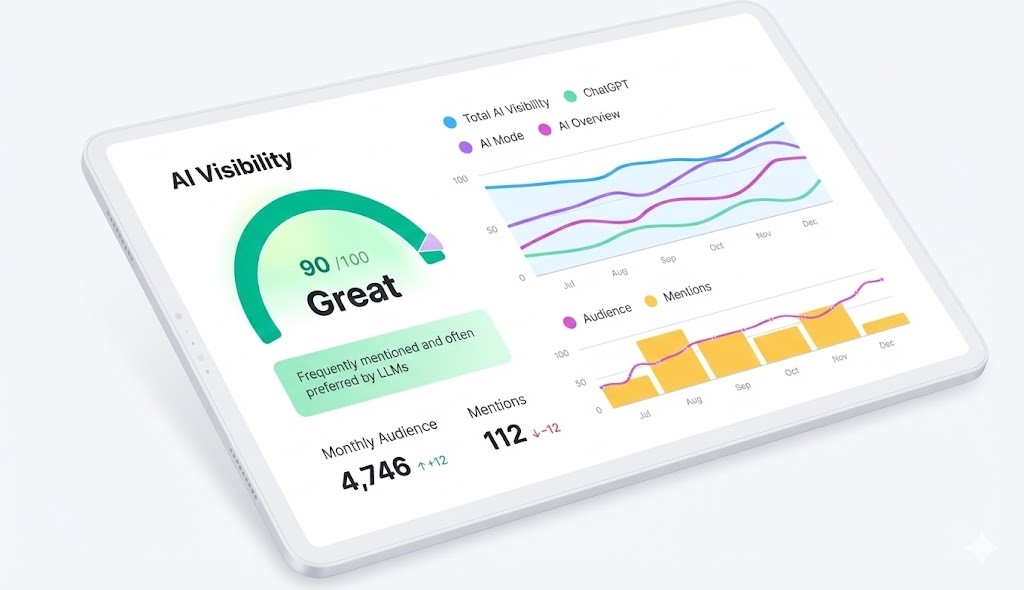
Traditional SEO metrics weren’t built for “one answer.” Yolando leans into AI-native reporting—most notably AI Share of Voice, which it describes as “how much of the conversation your brand owns when consumers ask questions that matter to your category.” [4] This is the metric that mirrors market reality: if AI gives one consolidated answer, then “share of voice in answers” is effectively your new visibility battlefield.
An audit is only half-useful if you can’t see who’s winning. Yolando’s framing around share of voice is inherently comparative—your brand’s presence relative to tracked competitors. [4]
Marketers are already moving in this direction—because audiences are. Adobe’s survey data shows both
real consumer discovery happening inside ChatGPT and
a majority of marketers planning to increase focus on AI visibility. [1]
That’s the signal: AI answers are becoming part of brand distribution, not just a curiosity.
If you’re just getting started, run a manual audit to learn the landscape. But if you want a repeatable program—something that behaves like SEO did when it matured—build a system around structured prompts, consistent measurement, and action tied to business value. That’s the shift from “checking what AI says” to actually shaping it.
Adobe, “ChatGPT as a Search Engine,” Adobe Express Learn Blog, Jul. 2025. https://www.adobe.com/express/learn/blog/chatgpt-as-a-search-engine
D. Gavoyannis, “AI Visibility Audit: How to Measure Your Brand’s Presence in AI Search,” Ahrefs Blog, Oct. 30, 2025. https://ahrefs.com/blog/ai-visibility-audit/
Yolando, “Topics & Prompts,” Yolando Help Center, 2025. https://yolando.com/help-center/topics-prompts
Yolando, “The Future of Discovery Depends on Winning AI Share of Voice,” Yolando Blog, 2025. https://yolando.com/blog/the-future-is-winning-ai-share-of-voice